리스트 · 스택 · 큐
가장 기본적인 선형linear 자료구조들입니다. 원소들이 한 줄로 늘어선 리스트에서 출발하여, 삽입·삭제 위치를 한쪽 끝(스택)이나 양 끝(큐)으로 제한하면 어떤 성질이 생기는지, 그리고 각 연산의 시간 복잡도가 구현 방식에 따라 어떻게 달라지는지를 정리합니다.
리스트
printList— 리스트 전체를 출력하는 것과 같은 분명한 작업을 수행한다.insert,remove— 각각 리스트 안의 특정 위치에 원소를 삽입하거나 삭제한다.findKth— 특정 위치(번째)의 원소를 반환한다.
배열 기반 리스트
배열array 기반 리스트 구현은 다음과 같은 장단점을 가집니다.
printList는 선형 시간, findKth는 상수 시간에 수행한다(인덱스로 바로 접근). insert,remove는 삽입·삭제가 일어나는 위치에 따라 시간 복잡도time complexity가 커질 수 있다. 배열의 마지막 위치에서의 삽입·삭제는이지만, 첫 위치에서는 뒤 원소를 모두 밀어야 하므로 이다. 따라서 최악의 경우 두 연산은 이다.
배열 기반으로 구현하더라도, 필요에 따라 크기를 늘려 주는 내장 메소드를 추가할 수 있습니다. 아래는 고정 용량 배열로 리스트를 구현한 예시입니다(실행 시 미초기화 값이 나오지 않도록 배열을 0으로 초기화했습니다).
#include <iostream>
using namespace std;

class ArrayList {
public:
    ArrayList(int size = 10) {   // constructor
        arr = new int[size]();    // dynamic allocation (0으로 초기화)
        capacity = size;
    }
    ~ArrayList() {                // destructor
        delete[] arr;
    }
    void insert(int index, int data) {   // insertion
        if (index < 0 || index >= capacity)
            cout << "Index out of range." << endl;
        arr[index] = data;
    }
    void remove(int index) {             // removal
        if (index < 0 || index >= capacity)
            cout << "Index out of range." << endl;
        for (int i = index; i < capacity - 1; i++)
            arr[i] = arr[i + 1];
    }
    int findKth(int k) {                 // find the element
        if (k < 0 || k >= capacity) {
            cout << "Index out of range." << endl;
            return -1;  // return -1 if there is no such case
        }
        return arr[k];
    }
    void printList() {                   // print the elements
        for (int i = 0; i < capacity; i++)
            cout << arr[i] << " ";
        cout << endl;
    }
private:
    int *arr;       // array
    int capacity;   // the maximum capacity
};

int main() {
    ArrayList list;
    list.insert(0, 3); list.insert(1, 7); list.insert(2, 4);
    list.printList();
    cout << list.findKth(2) << endl;
    list.remove(2);
    list.printList();
    return 0;
}연결 리스트
삽입과 삭제가 리스트 전반에서, 특히 리스트의 첫 번째 위치에서 자주 일어난다면 배열은 좋은 선택이 아닙니다. 이때 대체제로 연결 리스트linked list를 사용할 수 있습니다. 원소들이 메모리 상에 인접하여 저장되지 않도록 하고, 각 노드가 다음 노드의 주소를 포인터로 가리키게 만들어 삽입·삭제에서 발생하던

nullptr을 가리킨다. 중간 삽입·삭제는 포인터만 바꾸면 된다.배열 기반 리스트와 견주어 복잡도가 정반대로 뒤바뀝니다.
printList는 배열 기반과 마찬가지로이다. findKth는 배열과 달리 앞에서부터 포인터를 따라가야 하므로이다. - 반면
insert,remove는 (위치를 알고 있다면) 포인터만 고치면 되므로이다.
다만 마지막 원소의 삭제는 약간 까다롭습니다. 마지막 직전 원소를 찾아 nullptr과 연결시켜 주어야 하는데, 다음 노드만 가리키는 단순 연결 리스트singly linked list에서는 마지막 직전 원소를 찾기가 어렵기 때문입니다.
이중 연결 리스트
모든 노드가 다음 노드뿐 아니라 직전 노드와도 연결되도록 리스트를 수정할 수 있으며, 이를 이중 연결 리스트doubly linked list라고 합니다. 각 노드가 prev와 next 두 개의 포인터를 가지므로, 마지막 직전 원소를 찾는 것과 같은 양방향 탐색이 쉬워집니다. 또한 삽입·삭제 시 조건 분기를 줄이기 위해, 항상 비어 있는 머리 노드head node와 꼬리 노드tail node를 양 끝에 두는 기법을 쓸 수 있습니다.
아래는 머리·꼬리 포인터를 유지하는 이중 연결 리스트 구현입니다. 각 연산이 prev/next를 어떻게 조정하는지 따라가 보세요.
#include <iostream>
using namespace std;

class Node {
public:
    int data; Node* prev; Node* next;   // To avoid spacing
    Node(int data): data(data), prev(nullptr), next(nullptr) {}  // doubly linked
};

class DoublyLinkedList {
public:
    DoublyLinkedList(): head(nullptr), tail(nullptr) {}   // constructor
    ~DoublyLinkedList() {                                  // destructor
        while (head) {
            Node* temp = head;
            head = head->next;
            delete temp;
        }
    }
    void insert(int index, int data) {   // insertion
        Node* newNode = new Node(data);
        if (index == 0) {
            if (head) {
                head->prev = newNode;
                newNode->next = head;
            }
            head = newNode;
            if (!tail)
                tail = newNode;
            return;
        }
        Node* temp = head;
        for (int i = 0; i < index - 1 && temp; i++)
            temp = temp->next;
        if (temp) {
            newNode->next = temp->next;
            newNode->prev = temp;
            if (temp->next)
                temp->next->prev = newNode;
            temp->next = newNode;
            if (temp == tail)
                tail = newNode;
        }
        else {
            cout << "Index out of range." << endl;
            delete newNode;
        }
    }
    void remove(int index) {   // removal
        Node* temp = head;
        int key = 0;
        while (temp != nullptr) {
            if (key == index) {
                if (temp->prev)
                    temp->prev->next = temp->next;
                if (temp->next)
                    temp->next->prev = temp->prev;
                if (temp == head)
                    head = temp->next;
                if (temp == tail)
                    tail = temp->prev;
                delete temp;
                return;
            }
            temp = temp->next;
            key++;
        }
    }
    int findKth(int k) {   // find the element
        Node* temp = head;
        int index = 0;
        while (temp != nullptr && index < k) {
            temp = temp->next;
            index++;
        }
        if (temp != nullptr && index == k)
            return temp->data;
        else {
            cout << "Index out of range." << endl;
            return -1;  // not found
        }
    }
    void printList() {   // print the elements
        for (Node* temp = head; temp != nullptr; temp = temp->next)
            cout << temp->data << " ";
        cout << endl;
    }
private:
    Node* head; Node* tail;   // head and tail pointer
};

int main() {
    DoublyLinkedList dll;
    dll.insert(0, 3); dll.insert(1, 2); dll.insert(2, 4); dll.insert(3, 6);
    dll.printList();
    cout << dll.findKth(3) << endl;
    dll.remove(0);
    dll.printList();
    return 0;
}C++ STL에서는 vector가 배열 기반 리스트를, list가 이중 연결 리스트를 지원합니다. 두 컨테이너의 삽입·접근 방식 차이를 확인해 봅니다.
#include <vector>
#include <list>
#include <iostream>
using namespace std;

int main() {
    vector<int> v; list<int> l;
    v.push_back(1); v.push_back(2); v.push_back(3); v.pop_back();
    cout << v[1] << endl;                 // 인덱스 접근: O(1)
    l.push_front(1); l.push_front(2); l.push_front(3); l.pop_front();
    cout << l.front() << endl;            // 앞에서 삽입/삭제: O(1)
    return 0;
}리스트 연산별 시간 복잡도
| 연산 | 배열 기반 리스트 | 연결 리스트 |
|---|---|---|
printList | ||
findKth | ||
insert (위치 확보 시) | ||
remove (위치 확보 시) |
스택
스택stack은 삽입과 삭제가 탑top이라 불리는 한쪽 끝에서만 수행되도록 제한된 리스트로, 후입선출last-in first-out; LIFO의 성질을 가집니다. 나중에 넣은 원소가 먼저 나오는 구조입니다.
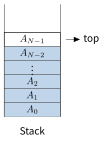
top에서만 일어난다(LIFO).- 리스트의
insert에 해당하는push,remove에 해당하는pop연산을 가지며, 다음에 제거될(맨 위) 원소를 반환하는top연산을 포함한다. - 스택도 결국 하나의 리스트이므로, 배열 기반 리스트나 연결 리스트 모두 스택을 구현하는 데 사용할 수 있다.
- 대부분의 현대적인 기계는 스택 연산을 하드웨어 수준에서 기본적으로 포함한다.
아래는 연결 리스트로 스택을 구현한 예시입니다. push는 새 노드를 맨 앞(top)에 붙이고, pop은 맨 앞 노드를 떼어 냅니다.
#include <iostream>
using namespace std;

class Node {
public:
    int data; Node* next;   // single link
    Node(int data): data(data), next(nullptr) {}
};

class Stack {
public:
    Stack(): topNode(nullptr) {}   // constructor
    ~Stack() {                      // destructor
        while (topNode != nullptr) {
            Node* temp = topNode;
            topNode = topNode->next;
            delete temp;
        }
    }
    void push(int data) {   // insertion
        Node* newNode = new Node(data);
        newNode->next = topNode;
        topNode = newNode;
    }
    void pop() {            // removal
        if (topNode == nullptr)
            cout << "Stack is empty" << endl;
        Node* temp = topNode;
        topNode = topNode->next;
        int poppedData = temp->data;
        delete temp;
    }
    int top() {             // find the top element
        if (topNode == nullptr) {
            cout << "Stack is empty" << endl;
            return -1; // if the stack is empty
        }
        return topNode->data;
    }
private:
    Node* topNode;
};

int main() {
    Stack s;
    s.push(10); s.push(20); s.push(30);
    cout << s.top() << endl;
    s.pop(); cout << s.top() << endl;
    return 0;
}C++의 stack STL은 스택 컨테이너를 그대로 지원합니다. 위와 똑같은 동작을 STL로 간결하게 쓸 수 있습니다.
#include <iostream>
#include <stack>
using namespace std;

int main() {
    stack<int> s;
    s.push(10);
    s.push(20);
    s.push(30);
    cout << s.top() << endl;
    s.pop();
    cout << s.top() << endl;
    return 0;
}큐
큐queue는 삽입이 일어나는 곳과 반대편, 즉 프론트front에서 삭제가 수행되도록 제한된 리스트로, 선입선출first-in first-out; FIFO의 성질을 가집니다. 먼저 들어온 원소가 먼저 나오는, 줄 서기와 같은 구조입니다.

front에서 삭제한다(FIFO).push,pop외에도, 곧 삭제될(맨 앞) 원소를 확인하는front연산을 포함한다.- 큐도 배열 기반 리스트, 연결 리스트를 모두 사용하여 구현할 수 있다.
C++의 queue STL은 큐 컨테이너를 지원합니다.
#include <iostream>
#include <queue>
using namespace std;

int main() {
    queue<int> q;
    q.push(10); q.push(20); q.push(30);
    cout << q.front() << endl;
    q.pop(); cout << q.front() << endl;
    return 0;
}원형 큐
배열 기반 큐에는 한 가지 약점이 있습니다. push와 pop이 계속 활발하게 일어나면, 앞쪽에서 빠져나간 자리(배열 앞부분)가 사용되지 않은 채 남아 공간이 낭비된다는 점입니다. 원형 큐circular queue는 링 버퍼ring buffer라고도 불리며, 양 끝이 연결된 고정 크기 배열로 이 문제를 해결합니다.
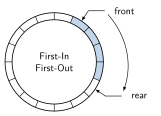
front와 rear가 원을 따라 회전하며 빈 앞자리를 재사용한다.front와rear라는 두 변수로 데이터가 존재하는 첫 부분과 마지막 부분을 표시한다.- 비어 있는 상태에서는 두 변수 모두
-1과 같은 특수한 값을 가진다. - 원형 큐에서는 종종 삽입과 제거를
push,pop이 아니라enqueue,dequeue로 부른다. - 인덱스를 계산할 때
(rear + 1) % bufferSize처럼 나머지 연산을 사용하여, 배열의 끝을 넘어가면 다시 처음으로 되돌아오게 만든다. 가득 찬 상태는(rear + 1) % bufferSize == front로 판정한다.
#include <iostream>
using namespace std;

class CircularQueue {
public:
    CircularQueue(int size) {   // constructor
        bufferSize = size;
        queue = new int[bufferSize];
        front = -1; // to denote the first element
        rear = -1;  // to denote the last element
    }
    ~CircularQueue() {          // destructor
        delete[] queue;
    }
    bool isFull() {
        return (rear + 1) % bufferSize == front;
    }
    bool isEmpty() {
        return front == -1;
    }
    void enqueue(int value) {   // insertion
        if (isFull()) {
            cout << "Queue is full.";
            return;
        }
        if (isEmpty())
            front = rear = 0;
        else
            rear = (rear + 1) % bufferSize;
        queue[rear] = value;
    }
    void dequeue() {            // removal
        if (isEmpty())
            cout << "Queue is empty.";
        int data = queue[front];
        if (front == rear)
            front = rear = -1; // Queue became empty
        else
            front = (front + 1) % bufferSize;
    }
    void printQueue() {         // print the elements
        if (isEmpty())
            cout << "Queue is empty.";
        int i = front;
        do {
            cout << queue[i] << " ";
            i = (i + 1) % bufferSize;
        }
        while (i != (rear + 1) % bufferSize);
        cout << endl;
    }
private:
    int front; int rear; int bufferSize; int *queue;
};

int main() {
    CircularQueue cq(5);
    cq.enqueue(1); cq.enqueue(2); cq.enqueue(3); cq.enqueue(4);
    cq.printQueue();
    cq.dequeue();
    cq.printQueue();
    cq.enqueue(5); cq.enqueue(6); cq.enqueue(7); // Queue is full.
    cq.printQueue();
    return 0;
}원형 큐를 조금 변형하면, 삽입과 삭제가 양 끝에서 모두 일어날 수 있는 양방향 큐double-ended queue 자료구조를 설계할 수 있으며, 이를 덱deque이라고도 합니다. 덱은 프론트에서의 삽입·삭제를 수행하는 enqueueFront, dequeueFront와, 리어rear에서의 삽입·삭제를 수행하는 enqueueRear, dequeueRear의 4가지 연산을 기본적으로 포함합니다.

front)과 뒤쪽(rear) 양 끝에서 모두 삽입·삭제가 가능하다.C++ STL의 deque는 덱 컨테이너를 지원합니다.
#include <iostream>
#include <deque>
using namespace std;

int main() {
    deque<int> dq;
    dq.push_front(3); dq.push_front(4);
    dq.push_back(11); dq.push_front(6);
    dq.pop_back();
    dq.pop_front();
    cout << dq[0] << endl;
    return 0;
}